Cooking, eating & talking medieval food in Manchester’s ancient woodland
(Image of Bailey’s Wood, courtesy of Friends of Bailey’s Wood)
Last Saturday I went cooking in the woods. Bailey’s Wood, to be precise, which is in Blackley, five miles north of Manchester city centre, and a short drive from where I live.
Blackley was a large deer park during the Middle Ages, owned by various lords of Manchester. It was still partially wooded in 1322 but from 1355, as pasture began to be rented out, it became predominantly farmland.
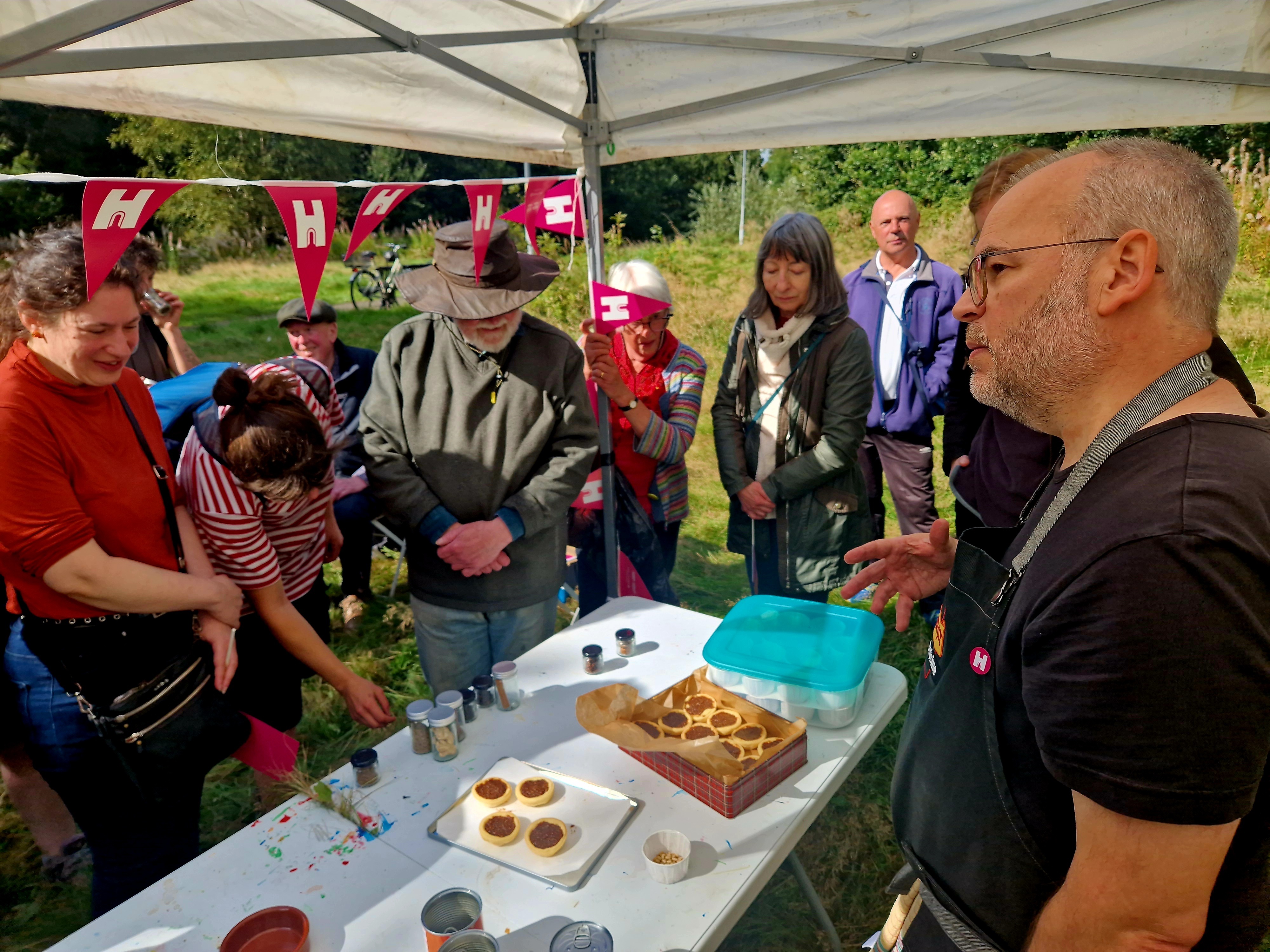
What survives today is an area of semi-natural ancient woodland, one of just a few such remaining in Manchester. It is surrounded by residential estates, and people living around the neighbourhood came to eat some of my Modern|Medieval food as we chatted about medieval cookery and recipe books, identified spices, and contemplated what medieval peasant folk may have foraged in the woods roundabout. Oh, and eat some medieval food. Did I mention food?
I cooked, over charcoal and oak chips, my take on Chycches, spicy (I’d say very spicy) chickpeas. This was a twist on a previous broth version of the dish, this reincarnation being a dry snack, easy to eat.
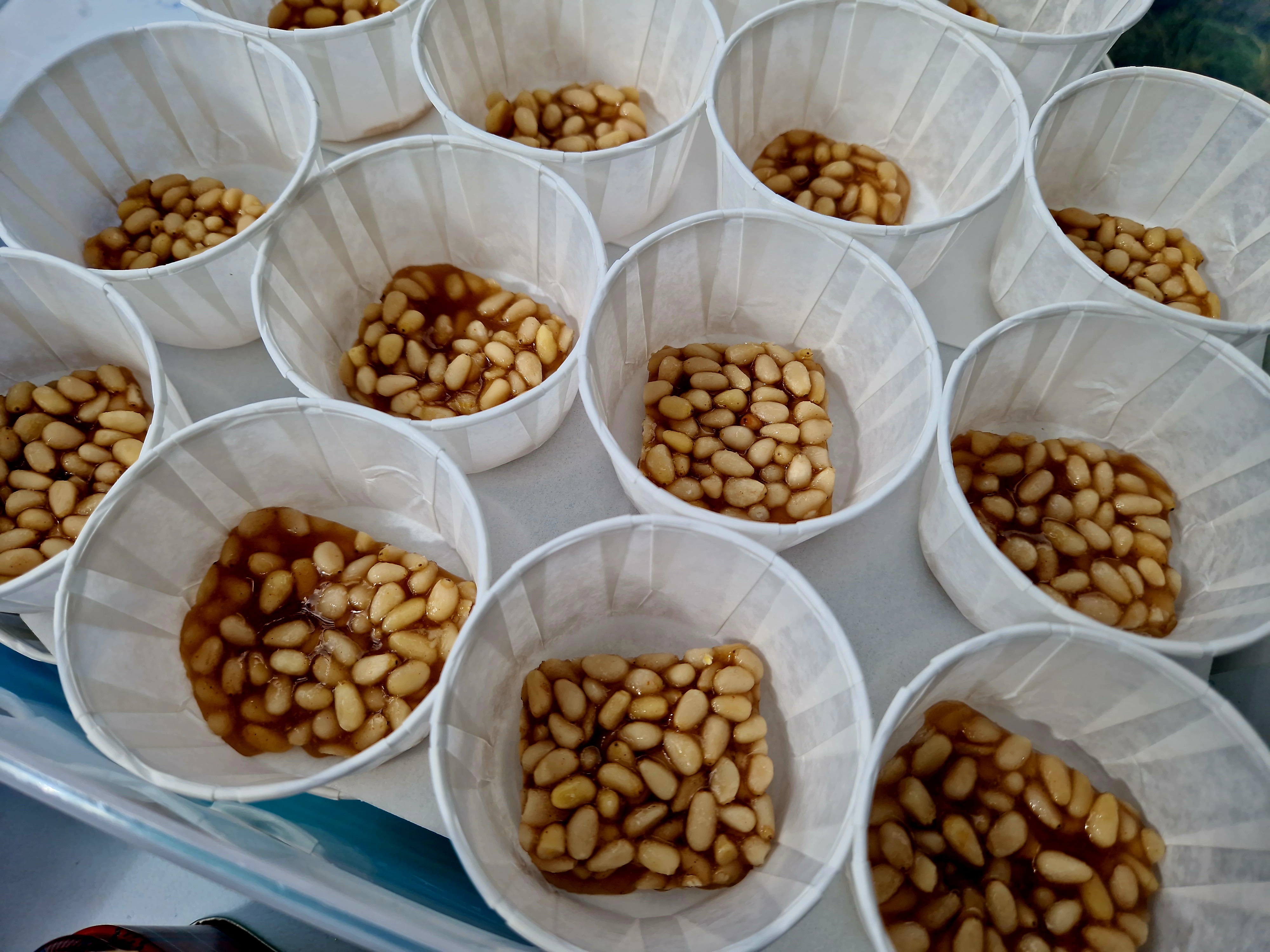
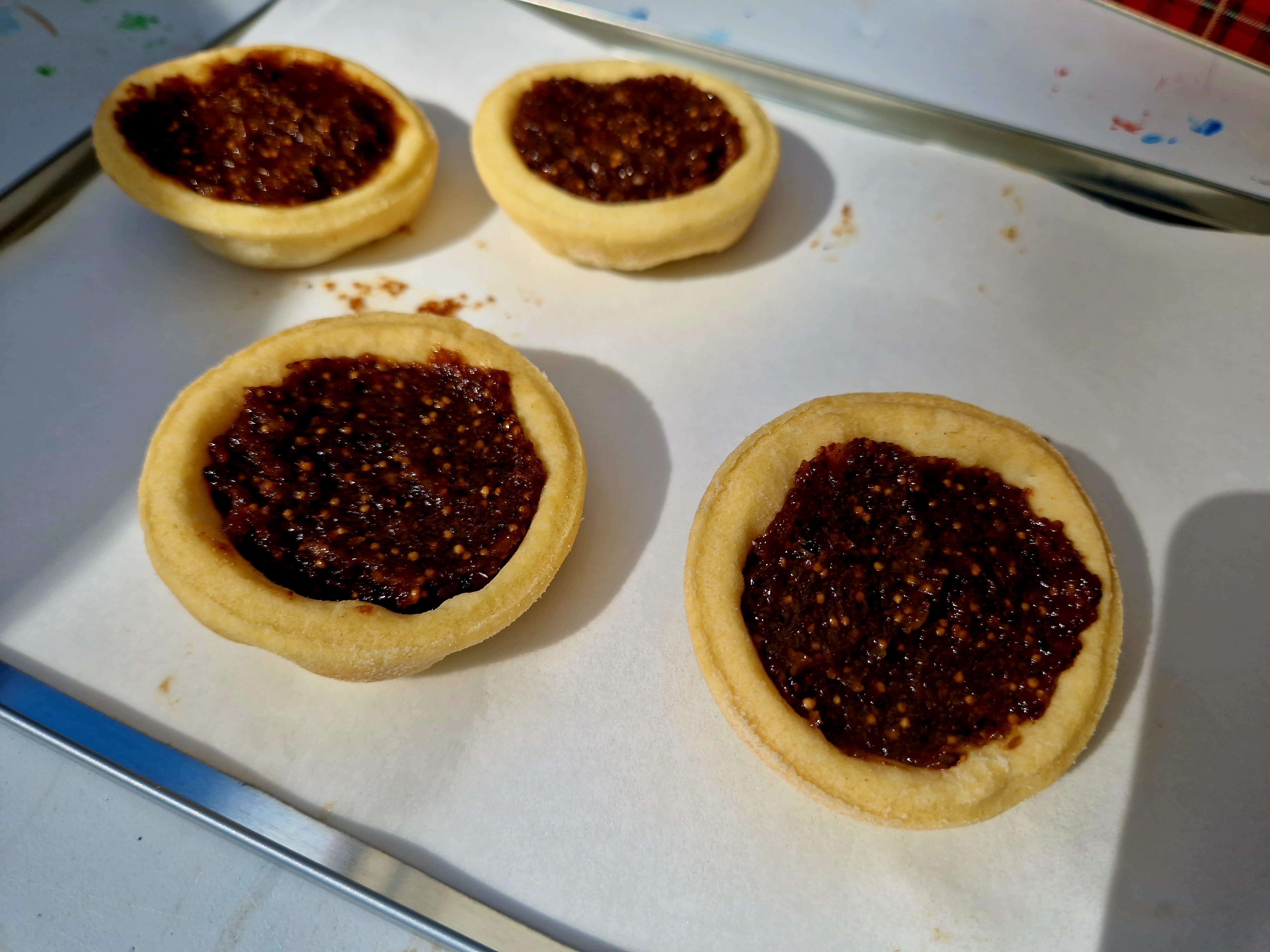
I also pre-made two medieval sweet treats, Payne Ragoun, or Queenly Bread, a pine nut toffee; and tarts filled with Potage Ryall, rather reminiscent in flavour of modern fig rolls – ‘but much better’, as one kind food sampler put it.
I promised the wonderful attendees to put the recipes on my website, and because they were so engaged and friendly, I will keep my promise. First up is my BBQ Smoked Spicy Chickpeas recipe. Recipes for Queenly Bread and Royal Fig Pottage Tarts will appear in part two of this blog.
Picture by Hannah Priest
BBQ Smoked Spicy Chickpeas
Special Equipment
You will need a barbeque; charcoal (lump wood); natural lighters; wood chips (I used oak).
For cooking, two steamer pan inserts with the lid, and a frying pan (none of which you mind scorching a bit).
For preparing the spices beforehand you will need a spice grinder (or coffee grinder) or pestle and mortar.
Ingredients
2 x 400g tins of chickpeas; drained, this equals about 460-480g of cooked chickpeas
4 medium cloves of garlic, pressed
Olive oil, a few good glugs
Sea salt, to taste (you could try smoked sea salt)
At least 1 tablespoon of Powder Fort (recipe below)
At least 1 tablespoon of ground, toasted cumin (instructions below)
Method
First, the spices:
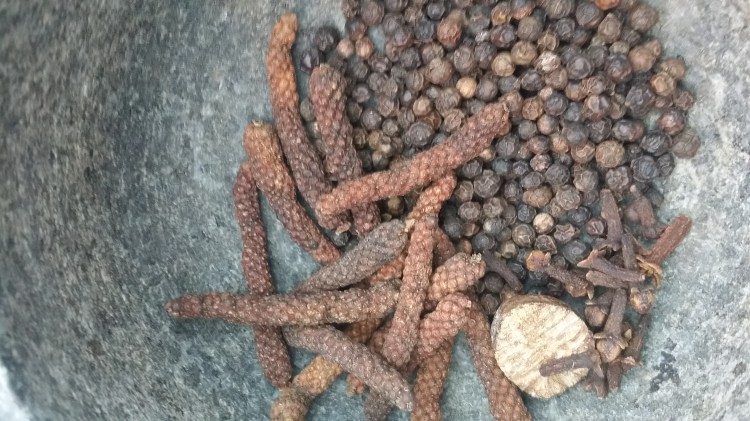
The spices in my Powder Fort, from left, clockwise: long peppers, black pepper corns, whole cloves, nutmeg. Picture by Christopher Monk.
To make my version of Powder Fort (based on a medieval Italian recipe, as no English recipes have survived)
Ingredients
15g whole black pepper corns
15g whole long peppers (becoming more widely available online)
½ teaspoon of whole cloves
¼ teaspoon of grated nutmeg (best grate your own from a whole nutmeg)
Method
Snap the long peppers into two or three pieces and put them and the black pepper corns into a grinder (I use an old coffee grinder). Grind well until fine.
Add the cloves and the nutmeg, and grind fully until very fine. Store in a glass jar.
In case you’re wondering, I add the cloves after grinding the two peppers because it minimises the risk of staining my old white plastic grinder with clove oil. If you have a super-duper stainless steel one, you will probably get away with grinding everything together at once. If you’re using a pestle and mortar (bonus points for being ‘medieval’), then I suggest you bash the long peppers first, as they are sometimes extremely hard to break up.
Picture by Christopher Monk
To make ground, toasted cumin
Heat a large, preferably stainless steel, frying pan on your hob, over a medium heat, for a few minutes. Place whole cumin seeds into the pan, enough to cover the base of the pan. Heat the seeds, stirring with a wooden spatula, for about five minutes.
Picture by Christopher Monk
You are looking for the seeds to develop a more intense, spicy-nutty aroma, and for their colour to go very slightly darker. If you burn them, they are of no use.
Allow the seeds to cool, and then grind them very finely in a spice or coffee grinder – or pestle and mortar. Store in a glass jar.
Ground, toasted cumin is for adding at the end of cooking, not at the beginning or midway. It’s a technique I learned from Madhur Jaffrey’s Indian cookery books. What a fabulous cook!
Cumin does not appear in the original medieval Chycches recipe but was used as a spice in other English recipes of the same time, where it was known as comyn. Just as with medieval cooks and many of their recipes, my version of Chycches is an evolution of the original dish.
Ground, toasted cumin. Picture by Christopher Monk
Now for the cooking over the BBQ…
Prepare the barbeque by loading charcoal and lighting it with natural lighters. I use charcoal lump-wood because it is quick to get going, burns relatively cleanly, and, moreover, was one of the fuels used in medieval kitchens. And I use natural lighters because they don’t taint the food.
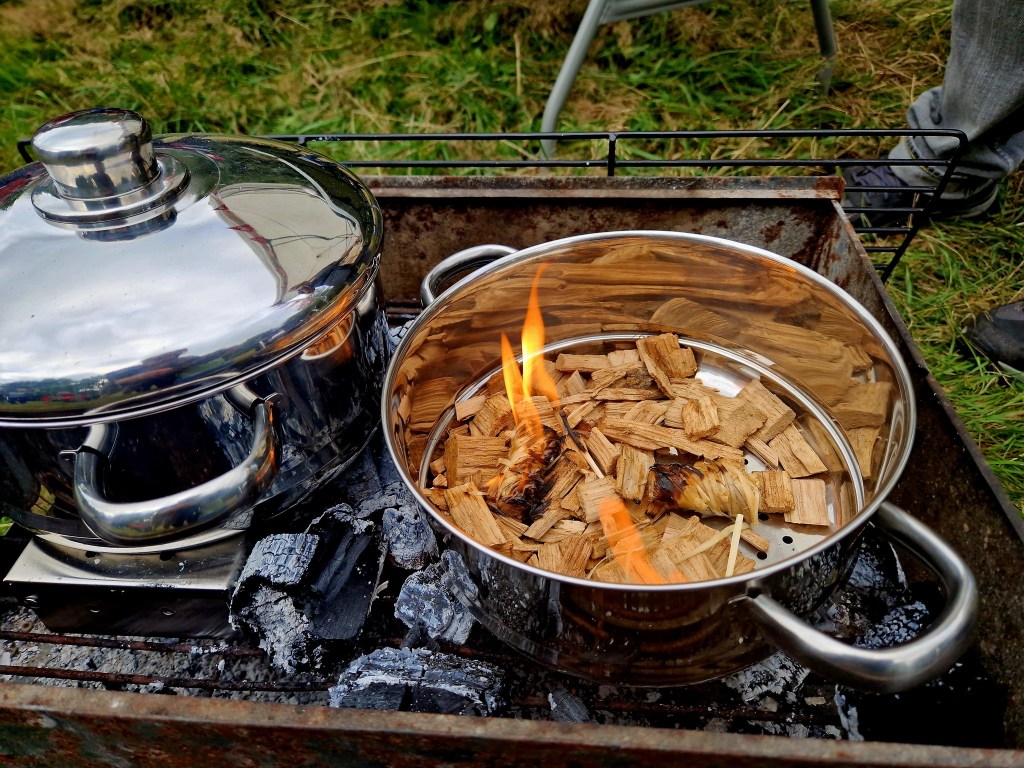
Once the coals are turning white, place your wood chips into one of the steamer inserts, light the chips, and place the steamer insert on the BBQ rack above the coals.
Put your chickpeas into the second of the steamer inserts, and place this on top of the first one, with the lid. Allow to smoke for at least 20 minutes. This should give the chickpeas a delicate smoking.
Once the charcoals were going white, I lit the oak chips in my bottom steamer insert (has holes), then placed the upper insert, with the chickpeas inside, on top. I smoked them for about 20 minutes. Picture by Hannah Priest.
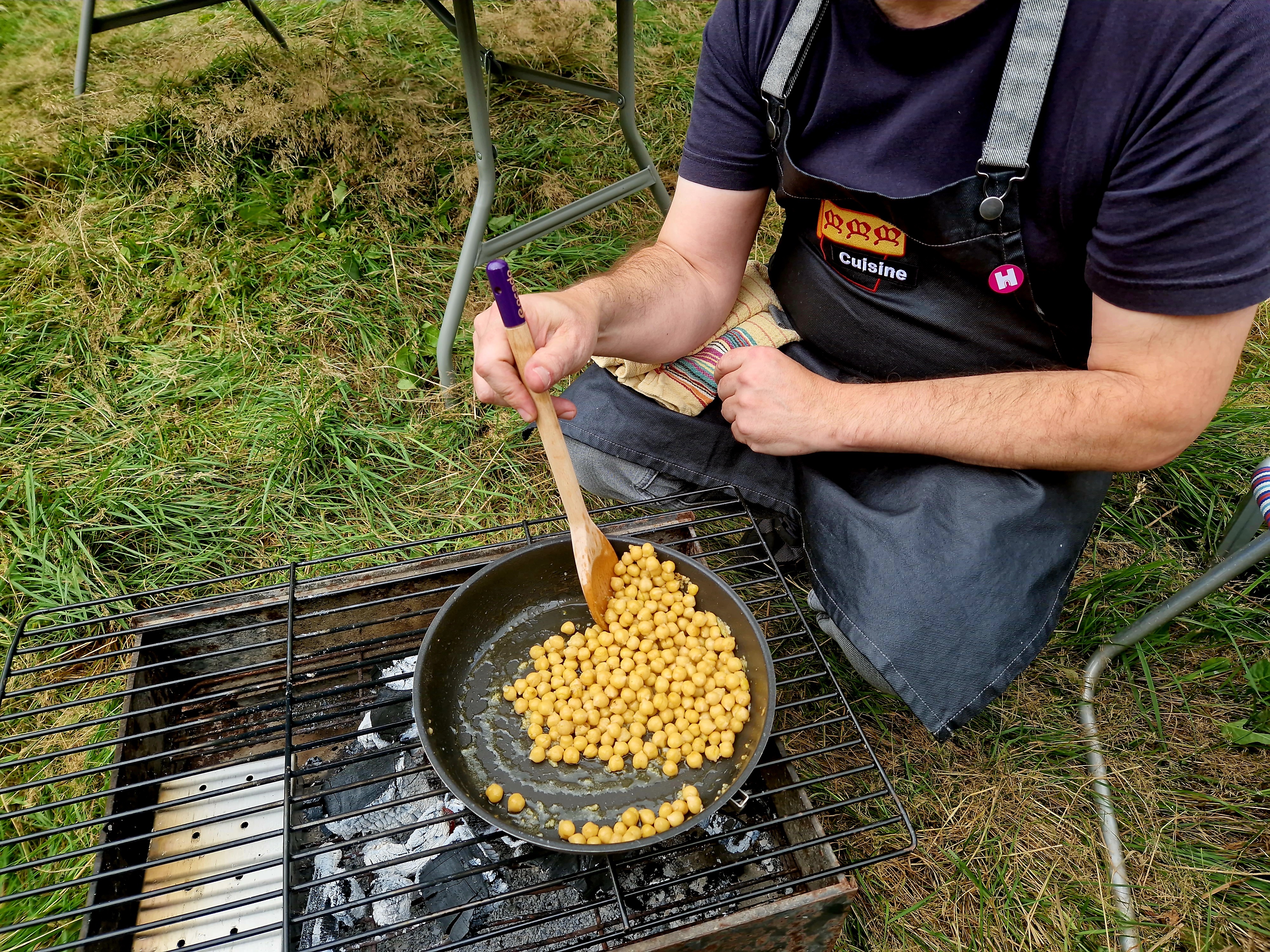
Place your frying pan onto the BBQ, adding a couple of good glugs of olive oil. Cook the garlic and the Powder Fort spice for a minute or so.
Tip in the smoked chick peas and stir so as to fully coat the chickpeas. Add sea salt – be generous, I would suggest. Add more olive oil if you feel they look a little dry.
Finally, sprinkle over the ground, toasted cumin right at the end and give the pan a good stir.
Serve in small bowls as a snack, like you would peanuts. They’re great with a beer or glass of wine.
Note on spicing
It’s important you are happy with the spice level, but I would recommend being generous with both the Powder Fort mix and the ground, toasted cumin.
At the Bailey’s Wood event, I went purely by taste when spicing and salting, regularly eating a chickpea or two to get it as I wanted it. So, please do keep tasting as you go along. It’s the way medieval cooks would have done it.
My second batch got very spicy, quite hot really, which everyone seemed to love!
Finally, if you can’t find long peppers, just adjust with more black pepper.
If you would like to support my independent research and creative work, feel free toBuy Me a Coffee.
Dr Christopher Monk is creating Modern Medieval Cuisine
View more posts
11 thoughts on “Down in the woods, part 1”
Note that Auntie Arwen’s Spices carries pouldre fort, pouldre douce, and several other blends redacted from medieval recipes. If you go to Pennsic, you know where they are set up.
Ah, interesting. Thank you. I will check them out and see if I agree with the mixes 😉😆. But I always prefer to grind my own whole spices, whenever feasible. Thanks again.
Update. Very good selection of spices. I like the sound of the Poudre Fort, though it’s not based on a medieval recipe, but rather one from the mid-16th century. My version is based on a 14th-century Italian recipe, specie negre e forte per assay savore (‘black and strong spices for many sauces’).
I was determined to get this gig done. I’d had to cancel one (a talk on Beowulf at a prog rock event) a couple of weeks ago because it was too far away and I’d not been well enough to write the talk 😞. I was so disappointed as the event included a première of Song of the Wildlands for which I’d written the Old English choral lyrics. So, I paced myself well during the week, baking sweet medieval goodies beforehand, and relying on others to lump heavy stuff to the wood. It was a fabulous afternoon. 😊😊😊








 MONK'S MODERN MEDIEVAL CUISINE
Note that Auntie Arwen’s Spices carries pouldre fort, pouldre douce, and several other blends redacted from medieval recipes. If you go to Pennsic, you know where they are set up.
LikeLiked by 1 person
Ah, interesting. Thank you. I will check them out and see if I agree with the mixes 😉😆. But I always prefer to grind my own whole spices, whenever feasible. Thanks again.
Update. Very good selection of spices. I like the sound of the Poudre Fort, though it’s not based on a medieval recipe, but rather one from the mid-16th century. My version is based on a 14th-century Italian recipe, specie negre e forte per assay savore (‘black and strong spices for many sauces’).
LikeLike
Glad to hear (and see) that your more or less flourishing! And lucky people of Blackley! 😋😋😋
LikeLiked by 1 person
I was determined to get this gig done. I’d had to cancel one (a talk on Beowulf at a prog rock event) a couple of weeks ago because it was too far away and I’d not been well enough to write the talk 😞. I was so disappointed as the event included a première of Song of the Wildlands for which I’d written the Old English choral lyrics. So, I paced myself well during the week, baking sweet medieval goodies beforehand, and relying on others to lump heavy stuff to the wood. It was a fabulous afternoon. 😊😊😊
LikeLiked by 1 person
1). ‘you’re’
2). Boggart Hole Clough is right up there with Lower Slaughter as a toponym
LikeLiked by 1 person
Yes, it’s brilliant, isn’t it!?
LikeLike
This is fantastic and looks like it was a good time! Happy to se you back up and around. : )
LikeLiked by 1 person
It was the best thing I’ve done in a while. Very engaged audience. And adrenaline got me through it. And, yes, I’m starting to feel better.
LikeLike