
A few weeks ago, I developed a recipe for two children to cook for a TV programme, which will be aired in the autumn on KMTV. The boys were both aged ten and they had an adult helping them. I used a recipe from King Richard II’s cookery book but simplified the method.
I wanted to share it more widely, so that anyone wanting to try a relatively simple, medieval-inspired dish could do so.
(Note: I have somewhat changed the words from what was given to the children, and it should be noted that the school that they cooked the dish in was a nut-free school, so I had to adapt what you see below.)
Cyprus Salmon (Vyand Cypre of Samoun in the original recipe)
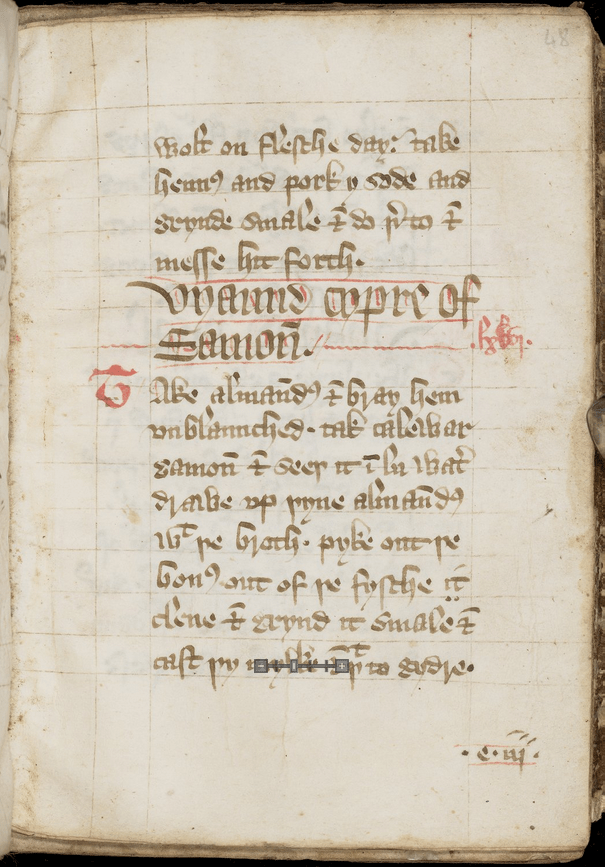
First, here’s my translation of the original recipe:
Take unblanched almonds and crush them. Take the freshest salmon* and poach it in warm water. Blend the almonds with the broth [the fish water]. Pick the fish clean of bones and grind it small and put it and the milk [the almond broth] together, and combine it with rice flour. Add to this powder fort, sugar and salt, and colour it with alkanet. Make sure it is not standing thick, and serve it forth.
*called calver salmon in the original
A little background
This looks a little like soft salmon pâté, and tastes very nice on some toasted bread. It’s from King Richard II’s cookery book, known as Fourme of Cury, meaning ‘the right method of cooking’. It was first written down about the year 1390. That’s more than 600 years ago!
Unusually, unblanched almonds were used. These are almonds with their brown skins left on. This may have been a mistake and instead blanched almonds may have been meant. These are pale coloured almonds that have had their skins removed.
Another odd thing is that the recipe forgets to tell the cook to cook out the rice flour. To cook out means that when the rice flour is added raw, it then needs to be cooked for a few minutes to get rid of the raw flavour. You will do this when following the recipe below.
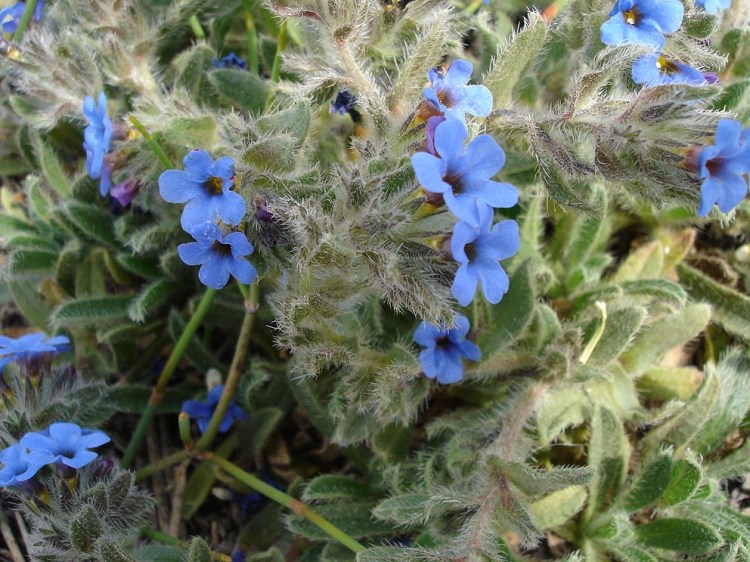
You’ll have spotted, no doubt, the word alkanet. Alkanet is a plant and its root, when dried and ground, was used as a dye in medieval times. Sometimes, as here, it was used to colour food red. Unfortunately, alkanet is toxic, and it is banned as a food colourant in some countries, including the UK.
I’ve substituted beetroot powder, since it does a similar job of colouring the dish. Moreover, beets were actually grown in medieval gardens so it’s an ingredient from the right period – though it seems beets were likely grown for their leaves.
The recipe that follows has been simplified. You really wouldn’t want to have to debone a whole salmon! And crushing or grinding your almonds very finely takes a long time, especially if done the medieval way, with a pestle and mortar (see the image, below).

On the matter of spices and seasoning, you should note two things. First, powder fort (‘strong powder’) was a spice mix used a great deal in cooking for royals and nobles. No recipe telling us which spices were used has survived. There is, however, a medieval Italian recipe for something very similar, and this is what I use in my medieval cookery. You can find out how to make powder fort here.
[I actually provided the spice mix ready ground for the children. I ought to sell my spice mix!]
Finally, I’ve added salt to the dish to improve the flavour. I think it was another mistake to have left it out.
You will need:
(Note: g = grams, ml = millilitres; you can do an AI search to convert to ounces and fluid ounces)
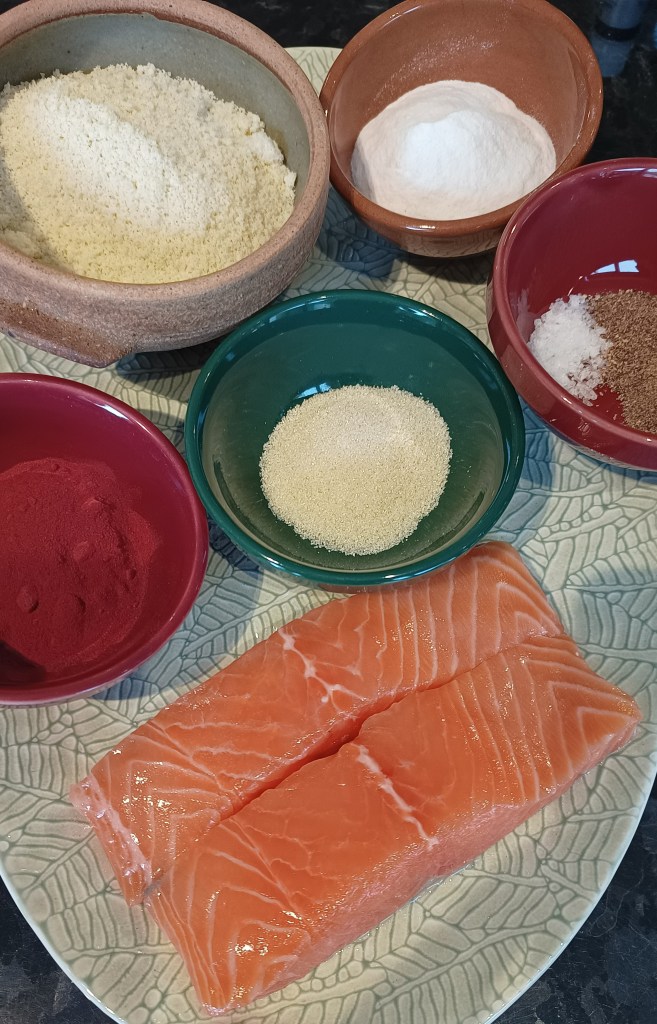
250 g of salmon fillets (skinless is preferred)
400 ml of water (enough to cover the salmon in a pan)
60 g ground almonds (already blanched)
40 g white rice flour (‘superfine’ in USA)
1 teaspoon of powder fort spice mix (and a little extra for sprinkling)
½ teaspoon of sea salt
1 teaspoon of granulated cane sugar (and a little extra for sprinkling)
1 tablespoon beetroot powder
Crusty white bread to serve
The method
- Place the water into a pan with the sea salt, powder fort, and sugar. Gently heat it but do not boil it. Stir it to dissolve the salt and sugar. Take the pan off the heat.
- Put the salmon into the water and leave for 7 minutes maximum, then remove it and put it into a glass bowl to cool. Keep your water! This is your fish broth.
- Put the pan of fish broth back on the hob (stovetop). Keep the heat low.
- Add the ground almonds to the fish broth. Cook gently for 3 minutes, stirring with a wooden spoon. This is the so-called milk of the recipe.
- Then add the rice flour and turn the heat up to medium. Cook for 4 minutes, all the time stirring with a wooden spoon. Make sure you don’t stop stirring, otherwise the mixture might stick to the bottom of the pan. You might want to share this duty with someone else!
- Once cooked, take off the heat.
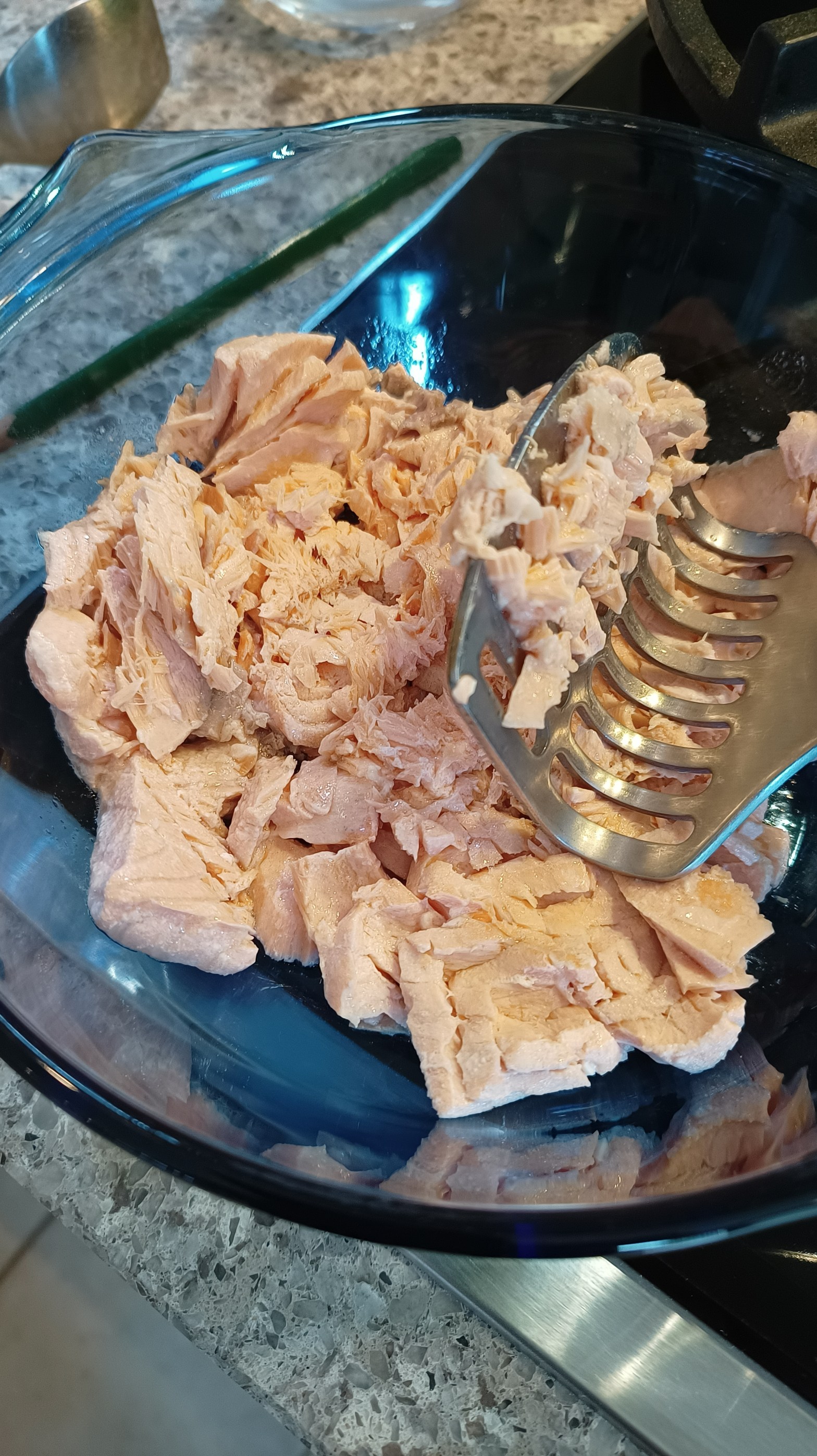
- Next, mash your salmon with a potato masher. If you could not find skinless salmon, you will need to peel the skin off before mashing. You need to mash it until it is quite smooth.
- Add the salmon to the pan and sprinkle over the beetroot powder. Beat it all with the wooden spoon until the colour turns an even pink.
- Taste it to see if you need to add more salt or spice mix. (People’s tastes vary.) If you think it does need more of either, don’t forget to give it one last good stir.
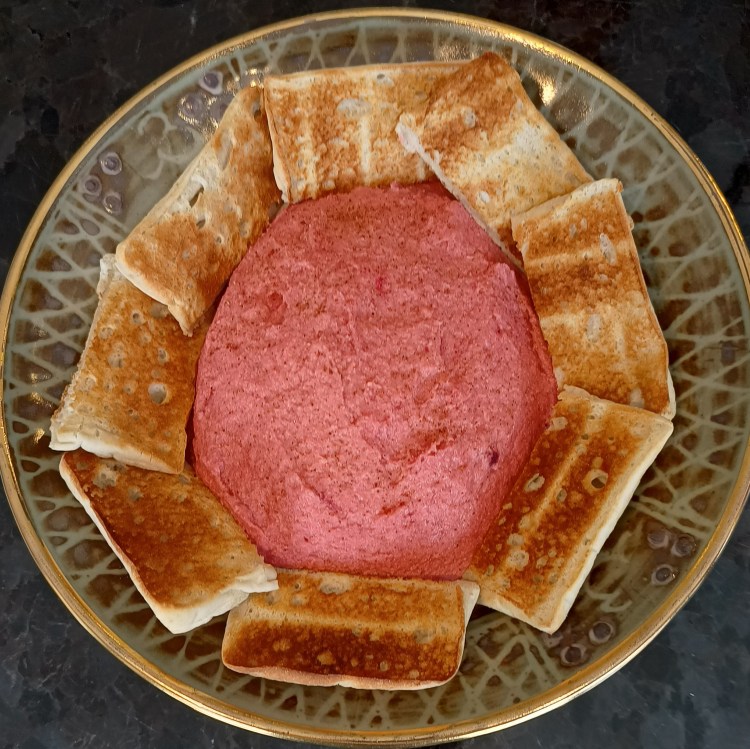
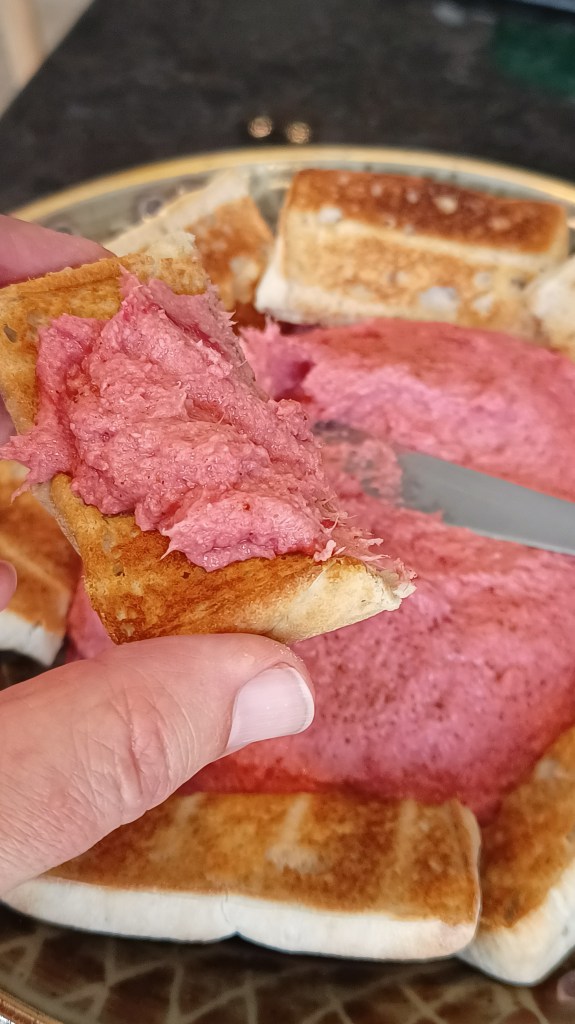
- Your Cyprus salmon mixture should look like a soft pâté, not too thick. However, don’t worry if it goes quite thick. In fact, I personally prefer it on the thick side (as you can see from the pictures).
- Slice some bread and toast it golden brown.
- Dish up the Cyprus Salmon onto a big serving plate and sprinkle a little sugar and powder mix on top. Arrange the toast around the salmon.
If you’re wondering why the dish is called Cyprus salmon, well that may be because some of the sugar that was imported into England in the medieval period was known as sugar of Cyprus.1 This sugar was both made and exported from the island of Cyprus in the Mediterranean Sea.2
Medieval cooks treated sugar like a spice, and since it was only very rich people who could afford a high quality sugar, such as sugar of Cyprus, the dish was probably named after it.
If there is another explanation, I haven’t found one!
Enjoy your food!
Support me
If you would like to show appreciation for this or any other post, head to Yieldeth me a cup of mead or consider becoming a monthly supporter.
You can also check out the recipes in my Buy Me A Coffee shop.
All donations are most gratefully received and support my independent research, outputs, and the maintenance of this website. Thank you.
Notes
- For the different terms used to describe the sugar of Cyprus, see the entry in the online Middle English Dictionary, Cipres, 1 (b) ↩︎
- For a PhD study of the production of sugar in medieval Cyprus, go to: MEDIEVAL FAMAGUSTA: SOCIO-ECONOMIC AND SOCIO-CULTURAL DYNAMICS (13th to 15th Centuries) ↩︎


Just the thing in case another pecunious de Lusignan comes calling. Better lay in plenty of Commanderia – they drink like fish.
I like the idea of beetroot powder as a coloring agent (I use it for char siu). Could sandalwood powder work, as well?
LikeLiked by 1 person
Yes, sandalwood powder (sanders) would work well.
LikeLike
Oho, I’ve been looking forward to this (though please let us know when the actual episode airs!). I love salmon in all forms, so will definitely be giving this a shot. And yes, I think if you played up the medievalness you could totally sell your spices, especially Powder Fort and Powder Douce. It’s a total pain, though, maybe collaborate with an established company – it won’t be yours from top to bottom, but it’s like 1/1000th the work, and since this is unlikely to turn into a megabusiness (famous last words) it’s not like you’d be losing a lot of dosh by outsourcing it.
LikeLiked by 1 person
Aha! Maybe I need to be a bit more famous though. 🤣
I hope you enjoy the Cyprus salmon.
LikeLike