More refined detail on the role of the bakers at Rochester Priory
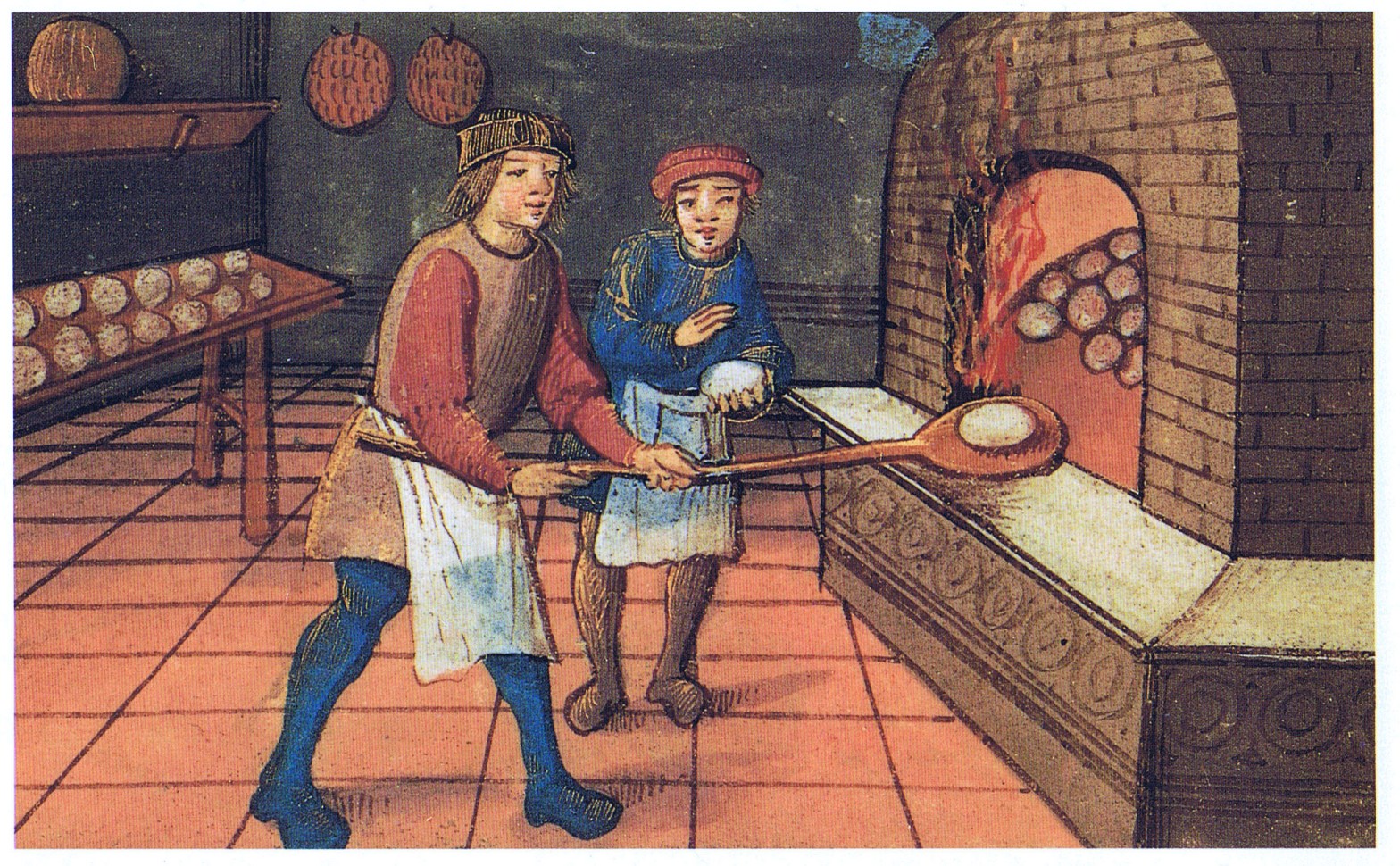
[Featured image: ‘A medieval baker with his apprentice. Bodleian Library MS. Canon. Liturg. 99, fol 26r’. Image with title courtesy of Wikimedia Commons. Wikimedia requests a United States public domain tag: take your pick.]
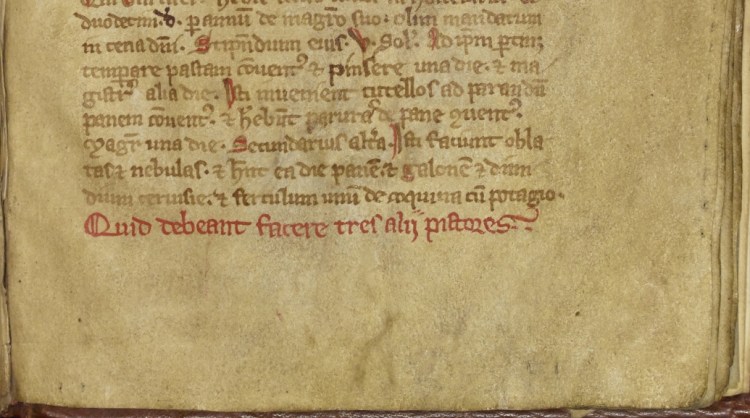
I’ve recently been spending time refining my translations for the section on the bakers in the Rochester Custumal (Custumale Roffense). This was a register of all the dues owed the priory of the Church of St Andrew, in Rochester (i.e. Rochester Cathedral); but most interesting of all is its section on the servants who worked for the monks. In revisiting the translations, I’ve realised there are some rather lovely details about what was going on back in the thirteenth century in the monks’ bakery.
Here are the key takeaways:
- The wheat arrived in sacks. Well of course it did! The thing is, I actually missed translating the phrase in saccis. Slapped wrists. Corrected.
- The cellarer, the senior monk in charge of food and drink at the monastery, showed his authority by nodding his permission to the second baker to release the grain allowance for the servants. All servants, regardless of rank, received the same amount of grain once a month.
- The master baker and the second in charge got to keep crust trimmings as a little perk. They took it in turns in taking the overbaked bits of the monks’ loaves. Waste not, want not.
- The three under-bakers (this is a new translation, just added this week) shared three key tasks, which they rotated on a daily basis:
- heat the oven
- shape the bread dough at the table
- sit selling loaves to pilgrims and passers-by, probably at the main gate of the priory.
- When it came to bolting the flour – that is, super-refining it with a large bolting cloth, in order to make it white flour – the three underlings had to strip off! They were probably not naked, but their outer garments would have been removed. It was a dusty business, bolting flour.
- The bakery always nominated the first loaf of each batch for Christ, which probably meant it went to the poor, who under Benedictine rules were to be treated as Christ himself.
Please do have a read through my new and revised translation of this most fascinating part of the Rochester custumal.
Just click on the tab Translations of Medieval texts. Or click here.
If you enjoy reading my posts and translations, or watching my videos, and you would like to show your appreciation, you can offer a small one-time donation to help support my independent research. Or you can join the monthly subscribers. All support is gratefully received and gets used to offset the costs of running this website.