
In revisiting an old edited title of a medieval recipe, I end up exploring how a recipe for a fruit and fish pie might actually make good culinary sense.
Category Archives: Language of cookery
Aqua Patys, Alexander the Great, and Dragons
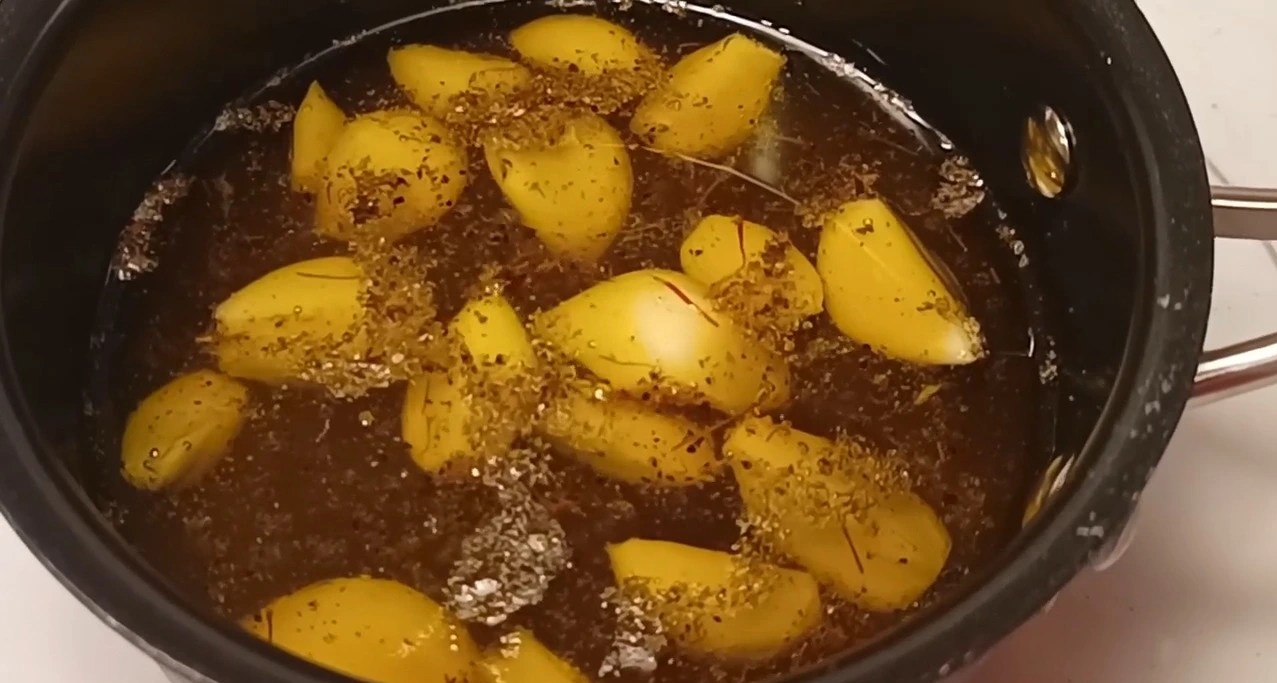
What does Aquapatys, the name of a garlic pottage actually mean? A poem about Alexander the great and dragons helps in finding the answer.
Language of Cookery 9: From brawn to brains

Did King Richard II have pig’s brain on the household menu? What’s the evidence for medieval English folk consuming animal brains?
Language of Cookery 8: The etymology of kuskenole

As a follow-up to my post on the kuskenole, I thought I’d share this short note about the origins of the name of this delicious pastry. Thanks go to Salma Quereshi for asking about this via Twitter… and consequently motivating me to look into it in more detail. According to Dictionnaire Étymologique de l’Ancien FrançaisContinue reading “Language of Cookery 8: The etymology of kuskenole”
Language of cookery 7: lard or lardons?
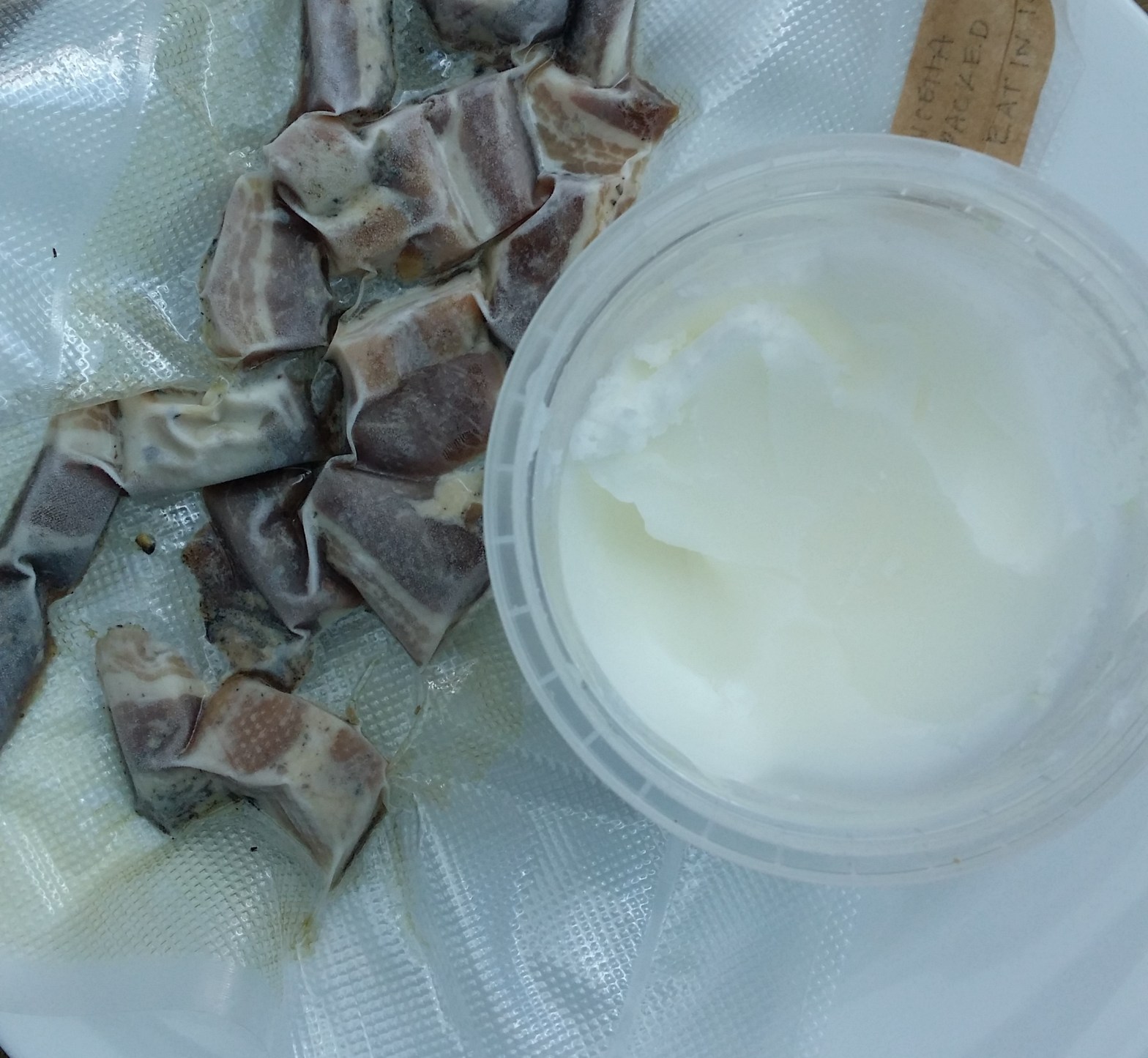
Dr Monk looks at a recipe for medieval fried custards and asks, when is lard not lard?
Language of cookery 6: Capons and “quinces”

What have egg yolks and quinces to do with one another? Follow Dr Monk as he looks at 3 fourteenth-century recipes for a capon dish.
Galentine: cold, hot, sauce or jelly?

I have been writing chapter 5 of my book (working title: How to Cook in the Fourteenth Century) which is dedicated to the sauce and condiment recipes in Richard II’s Forme of Cury. One of these recipes, ‘Galentyne’ in the Middle English text, intrigues me. The main reason for the fascination is that this particularContinue reading “Galentine: cold, hot, sauce or jelly?”
Language of cookery 5: What does Crutoun mean?

I find it so easy to get waylaid by curiosity when translating Forme of Cury, Richard II’s official cookery book. Give me a strange recipe name, and I’ll spend hours trying to work out what it might mean and where it’s from, instead of simply offering a modern English title that captures the essence ofContinue reading “Language of cookery 5: What does Crutoun mean?”
Three medieval soft fruits

I love this time of year: late spring. My strawberries are just beginning to ripen — I’m going to have a fully ripe strawberry in May for the first time in about 10 years! My patio raspberries are being visited by many a bumblebee — I have quite a small garden, so dwarf fruit bushesContinue reading “Three medieval soft fruits”
Language of cookery 4: meat ‘purses’
I love discovering the meanings behind the names given to medieval dishes. Call me scholar, call me nerd, I just can’t help myself. Many of the recipe titles in Richard II’s official cookery book, Forme of Cury (c. 1390), have bamboozled antiquarians and academics for centuries, so I get a kick out of working outContinue reading “Language of cookery 4: meat ‘purses’”
 MONK'S MODERN MEDIEVAL CUISINE